
Complete Guide to Physiotherapy After Knee Replacement
Knee replacement surgery fixes pain.
Physiotherapy restores life.
Many patients believe the surgery itself is the hard part. It isn’t. The real recovery begins after surgery, when physiotherapy starts. Without proper rehabilitation, even the best knee replacement can fail to deliver good results. With the right physiotherapy plan, most people walk confidently, climb stairs, and return to daily activities within months.
This guide explains exactly how physiotherapy works after knee replacement, what to expect at each stage, and how to recover faster and safer.
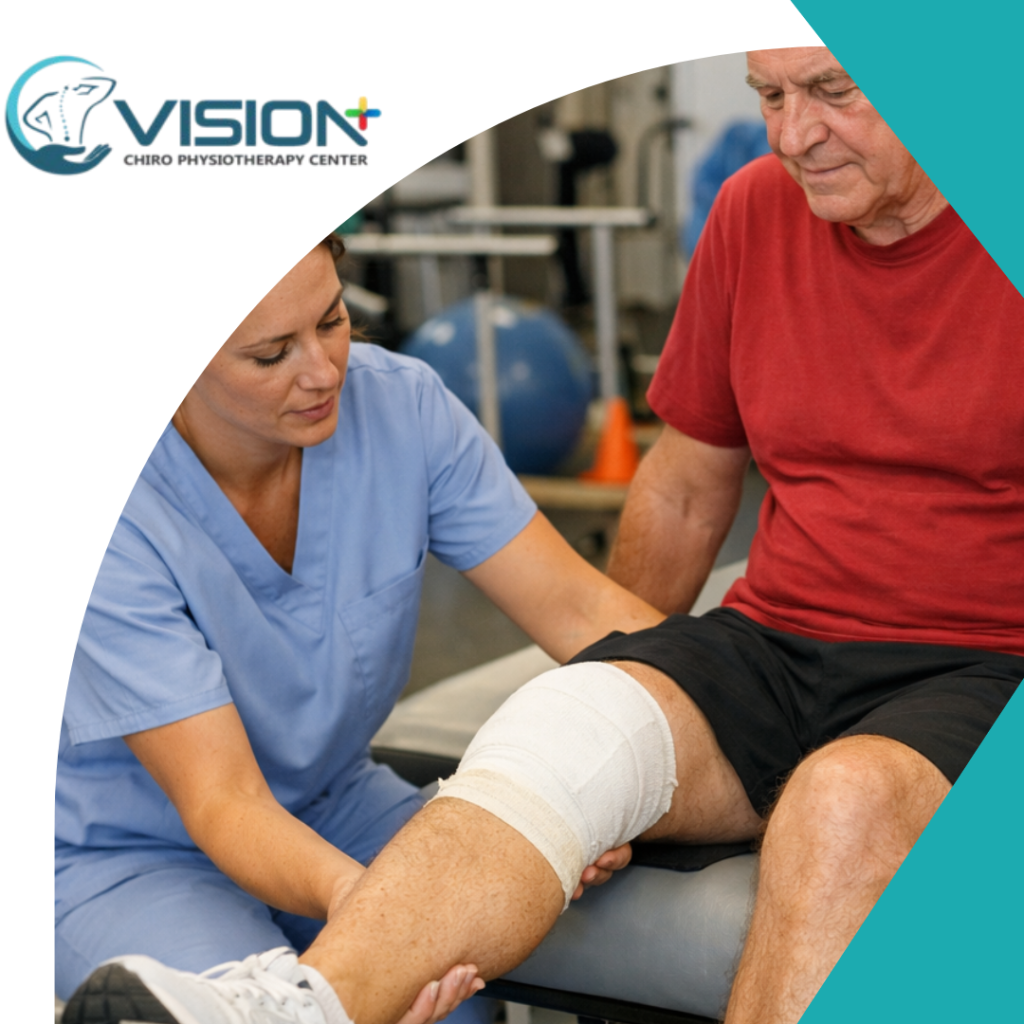
Why Physiotherapy After Knee Replacement is Essential
Knee replacement replaces damaged joint surfaces, but it does not automatically restore movement or strength. After surgery:
- Muscles become weak
- The knee becomes stiff
- Swelling limits movement
- Balance and walking pattern are disturbed
Physiotherapy solves these problems step by step.
Patients who skip or delay physiotherapy often face long-term stiffness, pain, and difficulty walking. In contrast, patients who follow a structured physiotherapy program recover faster and achieve better joint function.
When Physiotherapy After Knee Replacement should start?
Physiotherapy usually starts within 24 hours of surgery.
Early movement prevents complications like:
- Joint stiffness
- Blood clots
- Muscle wasting
- Poor walking pattern
Even simple ankle movements and gentle knee bends in bed make a big difference in long-term recovery.
Phases of Physiotherapy After Knee Replacement
Recovery happens in stages. Each stage has specific goals and exercises.
Phase 1: First Week After Surgery (Hospital Phase)
Goal: Reduce pain, swelling, and start movement.
What physiotherapy includes
- Ankle pumping exercises to improve circulation
- Gentle knee bending and straightening
- Quadriceps activation exercises
- Assisted walking with walker or crutches
- Breathing exercises
- Education on safe movement and posture
Expected progress
- Sitting up independently
- Standing with support
- Walking short distances
- Bending knee up to 60–90 degrees
Pain is normal during this stage. Movement is still required. Avoiding movement slows healing.
Phase 2: Weeks 2–4 (Early Home Recovery)
Goal: Increase knee movement and walking independence.
Focus areas
- Increasing knee bend to 100–110 degrees
- Straightening knee fully
- Strengthening thigh and hip muscles
- Improving balance
- Walking with less support
Common exercises
- Heel slides
- Straight leg raises
- Sitting knee bends
- Standing mini-squats
- Supported stair climbing
This is the most critical phase. Missing physiotherapy here often leads to permanent stiffness.
Phase 3: Weeks 4–8 (Strength and Control Phase)
Goal: Restore strength, confidence, and functional movement.
What happens in this phase
- Walking without walker
- Strength training with resistance bands
- Balance and coordination exercises
- Gait correction
- Endurance training
Patients usually feel stronger but still experience stiffness in the morning or after rest. This is normal and improves with consistent exercise.
Phase 4: 2–6 Months (Advanced Recovery)
Goal: Return to normal daily life.
Activities added
- Advanced strengthening
- Step-ups and step-downs
- Outdoor walking
- Cycling
- Light functional activities
By 3 months, most patients walk normally. Full recovery can take 6–12 months depending on age, health, and exercise consistency.
Physiotherapy Exercises After Knee Replacement
Exercises are the foundation of recovery. Skipping them is the biggest mistake patients make.
Key exercise groups
1. Range of motion exercises
- Heel slides
- Knee bends while sitting
- Passive stretching
2. Strengthening exercises
- Quadriceps sets
- Hamstring strengthening
- Glute activation
- Calf raises
3. Balance exercises
- Standing on one leg
- Weight shifting
- Walking drills
4. Functional exercises
- Sit to stand
- Stair climbing
- Walking pattern correction
Always perform exercises as advised by a physiotherapist. Overdoing can cause swelling. Underdoing causes stiffness.
How Long Is Physiotherapy Needed After Knee Replacement?
Most patients need 8 to 12 weeks of guided physiotherapy after knee replacement.
Some need longer, especially if:
- They had severe stiffness before surgery
- They are elderly
- They delayed starting physiotherapy
- They have diabetes or obesity
Home exercises should continue for at least 6 months for best results.
Home Physiotherapy vs Clinic Physiotherapy
Both have value. The right choice depends on the patient.
Home physiotherapy
Best for:
- Elderly patients
- First 2–4 weeks after surgery
- Patients with mobility issues
Clinic physiotherapy
Best for:
- Advanced strengthening
- Balance training
- Equipment-based rehab
- Faster functional recovery
Many patients start with home physiotherapy and shift to clinic-based rehab later.
Pain During Physiotherapy: Is It Normal?
Yes. Mild to moderate discomfort is normal and expected.
However, sharp pain, excessive swelling, or severe pain after sessions means something is wrong. In such cases, the physiotherapy plan must be adjusted.
Pain should reduce week by week. If pain increases after 4–6 weeks, reassessment is needed.
Common Mistakes After Knee Replacement Surgery
These mistakes slow recovery and cause long-term problems.
- Skipping physiotherapy sessions
- Not doing home exercises
- Avoiding knee bending due to pain
- Sitting for long hours without movement
- Walking incorrectly without correction
- Stopping physiotherapy too early
Consistency matters more than intensity.
Signs Your Physiotherapy Is Working
- Knee bending improves weekly
- Swelling reduces gradually
- Walking becomes easier
- Pain decreases steadily
- You rely less on support
- Confidence increases
If none of these happen after 3–4 weeks, your program needs correction.
When to Contact Your Physiotherapist Immediately
- Sudden increase in pain or swelling
- Redness or heat around knee
- Fever
- Severe stiffness that worsens
- Difficulty bearing weight
These are warning signs and should not be ignored.
Long-Term Care After Knee Replacement
Even after formal physiotherapy ends, continue:
- Daily stretching
- Strength training twice a week
- Walking or cycling regularly
- Maintaining healthy weight
- Avoiding high-impact sports
A well-rehabilitated knee replacement can last 15–20 years or more.
Closing Remarks
Knee replacement surgery is only the beginning.
Physiotherapy is what gives you your life back.
A structured, progressive, and consistent physiotherapy program is the difference between just walking and walking confidently without pain. Start early. Stay consistent. Follow expert guidance. The results are worth it.
📞 Book Your Knee Replacement Physiotherapy in Amalapuram Today
Early physiotherapy = faster recovery.
Delayed physiotherapy = long-term stiffness.
📍 Vision Physiotherapy and Stroke Rehabilitation Centre
📞 Call: 9063751666
📍 Amalapuram
Start your recovery the right way.
When should start physiotherapy after knee replacement?
Physiotherapy usually starts within 24 hours after surgery. Early movement prevents stiffness, improves blood flow, and speeds recovery. Delaying rehab is one of the biggest reasons for poor results.
How long do I need physiotherapy after knee replacement?
Most patients need 8–12 weeks of structured physiotherapy. Some may need more, depending on age, strength, pain, and how well exercises are followed at home.
Is physiotherapy painful after knee replacement?
Yes, some discomfort is normal. But it should never be unbearable. Pain means tissues are healing and stretching. A good physiotherapist pushes progress without causing damage.
How many sessions of physiotherapy are required?
Typically 20–40 sessions, depending on progress. The first 4–6 weeks are critical. Skipping sessions slows recovery and increases stiffness.
Can I do exercises at home instead of physiotherapy?
Home exercises are important, but they are not a replacement for supervised physiotherapy. You need professional guidance for range of motion, gait training, and strength progression