
Role of Exercises in Physiotherapy
The role of exercises in physiotherapy is central to recovery, rehabilitation, and long-term pain relief. While machines and manual therapy help in early stages, exercises are what create lasting change. Without them, improvement is temporary. With them, the body regains strength, control, and confidence in movement.
Physiotherapy exercises are not random workouts. They are carefully selected movements designed to correct muscle imbalance, improve joint function, restore coordination, and prevent pain from returning. This article explains why exercises are essential in physiotherapy and how they help the body heal properly.
Why Exercises Are the Foundation of Physiotherapy
Pain usually develops when the body stops moving correctly. Muscles become weak or tight. Joints lose mobility. Balance and coordination reduce. Exercises reverse these problems.
The role of exercises in physiotherapy is to restore normal movement patterns so the body can function without strain. Manual therapy may reduce pain, but exercises make the improvement permanent.
How Physiotherapy Exercises Are Different From Regular Workouts
Many people think physiotherapy exercises are the same as gym exercises. They are not. Gym workouts focus on fitness. Physiotherapy exercises focus on correction and control.
In physiotherapy, exercises are:
- Based on assessment
- Targeted to weak or inactive muscles
- Progressed slowly
- Designed to improve function, not appearance
Exercises Help Reduce Pain Naturally
Pain reduces when muscles support joints properly and movement becomes smooth. Exercises improve blood flow, reduce stiffness, and decrease stress on painful areas. Over time, pain signals reduce without medication.
Strengthening Weak Muscles: A Key Role of Exercises
Weak muscles force other muscles to overwork. This causes pain and fatigue. Physiotherapy exercises strengthen specific muscles that are failing to do their job.
For example:
- Core muscles support the spine
- Glute muscles protect the hips and knees
- Shoulder stabilizers prevent neck and shoulder pain
Improving Joint Mobility Through Exercises
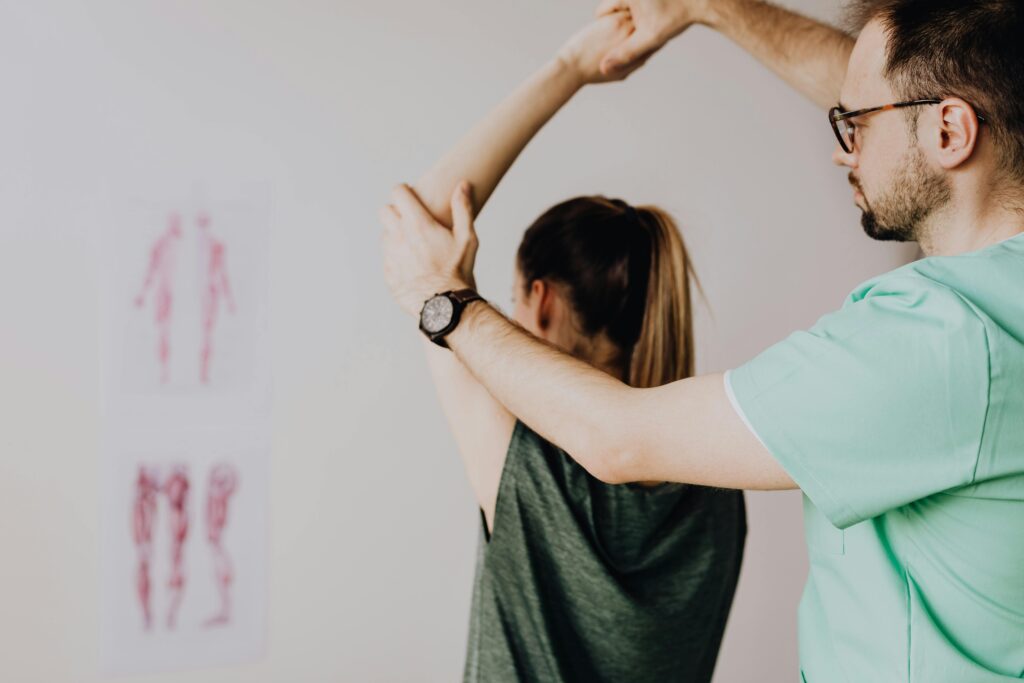
Joints need movement to stay healthy. Lack of movement causes stiffness and pain. Physiotherapy exercises gently restore range of motion without damaging tissues.
This is especially important after:
- Injury
- Surgery
- Prolonged bed rest
- Stroke
- Arthritis
Exercises Re-Educate the Nervous System
After injury or pain, the brain becomes protective. It restricts movement even when tissues are healed. Physiotherapy exercises retrain the nervous system to move safely again.
This process improves coordination, balance, and confidence. It is a key reason the role of exercises in physiotherapy goes beyond muscles and joints.
Role of Exercises in Posture Correction
Poor posture is not just a habit. It is usually a strength and control problem. Physiotherapy exercises strengthen postural muscles and teach the body to hold correct alignment naturally.
Exercises for posture focus on:
- Deep core muscles
- Upper back muscles
- Neck stabilizers
- Hip control
Exercises in Sports and Injury Rehabilitation
After sports injury, exercises rebuild strength and prevent re-injury. Jumping back to sports without proper exercise rehab leads to repeat injury.
Physiotherapy exercises restore:
- Strength
- Speed
- Balance
- Endurance
- Movement control
Role of Exercises in Stroke and Neurological Rehabilitation
In neurological conditions, exercises help the brain relearn movement. Repetition and correct movement patterns build new neural connections.
Exercises Prevent Pain From Coming Back
Pain returns when the cause is not fixed. Exercises fix the cause. That is why physiotherapy includes home exercise programs. These maintain improvements even after treatment ends.
The preventive role of exercises in physiotherapy is what makes recovery last.
Why Consistency Matters More Than Intensity
Doing exercises once a week does nothing. Doing them correctly and consistently changes the body. Physiotherapy focuses on quality, not quantity.
This is why the role of exercises in physiotherapy depends on:
- Correct technique
- Regular practice
- Proper progression
- Therapist guidance
Common Mistakes People Make With Physiotherapy Exercises
- Doing exercises too fast
- Skipping days
- Copying online exercises
- Stopping once pain reduces
- Ignoring posture during exercise
These mistakes reduce the effectiveness of physiotherapy. Exercises must be specific and guided.
When Exercises Should Be Avoided or Modified
Exercises are powerful, but only when prescribed correctly. In acute injuries, severe pain, or post-surgery cases, exercises must be modified. A physiotherapist decides when and how to progress safely.
Final Thoughts
The role of exercises in physiotherapy is fundamental. They reduce pain, restore movement, strengthen weak areas, improve posture, retrain the nervous system, and prevent future injuries. Machines and hands-on therapy help, but exercises create lasting recovery.
If you want real results, exercises are not optional. They are the treatment.
Consultation
If you are dealing with pain, stiffness, weakness, or recurring injuries, consulting a physiotherapist helps you understand which exercises your body actually needs. With professional guidance, exercises become treatment—not guesswork.
Visit our physiotherapy clinic to start a structured exercise program designed for your recovery and long-term health.
Frequently Asked Questions
Why are exercises important in physiotherapy?
Exercises are important because they restore strength, mobility, and control in the body. While manual therapy reduces pain, exercises create long-term recovery by correcting the cause of the problem.
Are physiotherapy exercises different from gym exercises?
Yes. Physiotherapy exercises are corrective and therapeutic. They are prescribed after assessment to target weak or tight muscles, while gym exercises focus mainly on fitness and strength.
Do I need to do exercises even after pain reduces?
Yes. Stopping exercises early is one of the main reasons pain returns. Continuing exercises helps maintain strength and prevents future injuries.
Are exercises safe for elderly patients?
Yes. Physiotherapy exercises are modified for age, strength, and balance. They are safe and highly effective for improving mobility and independence in older adults
How long do exercises take to show results in physiotherapy?
Many patients notice improvement within 1–3 weeks. Long-term benefits develop over several weeks of regular exercise and proper progression.
Pingback: Complete Guide To Physiotherapy After Knee Replacement Surgery