
Physiotherapy for Lower Back Pain: A Practical, Honest Guide to Recovery
Lower back pain is one of the most common reasons people struggle with daily life. Sitting becomes uncomfortable. Bending feels risky. Sleep gets disturbed. Many people ignore it at first or depend on painkillers, hoping it will settle on its own. Sometimes it does. Often, it doesn’t.
This is where physiotherapy for lower back pain plays a critical role. It focuses on understanding why the pain started, how your body is moving now, and what needs to change for proper recovery. It is not about temporary relief. It is about fixing the problem.
Understanding Lower Back Pain
Lower back pain usually develops when the spine and surrounding muscles are exposed to repeated stress without proper support. This stress may come from long sitting hours, poor posture, weak core muscles, improper lifting, or sudden strain.
Pain may stay localized in the lower back or spread to the hips and legs. Some people feel stiffness mainly in the morning. Others notice pain increasing as the day progresses. These patterns give important clues during assessment.
Physiotherapy looks at these details instead of treating pain as a single condition.
Why Physiotherapy for Lower Back Pain Is Effective
Painkillers reduce pain signals. Rest reduces movement. Neither corrects the underlying issue.
Physiotherapy for lower back pain works because it addresses movement, strength, and control. The goal is to restore how the spine and muscles work together during everyday activities like sitting, walking, bending, and lifting.
Physiotherapy helps by:
- Reducing muscle tension and stiffness
- Improving spinal mobility
- Strengthening weak support muscles
- Correcting posture and movement habits
- Preventing recurrence
This approach leads to more reliable and lasting improvement.
Physiotherapy Assessment: The Most Important Step
Treatment should never start without assessment.
During a physiotherapy evaluation, the therapist looks at:
- Standing and sitting posture
- Lumbar spine movement
- Muscle strength and flexibility
- Core stability
- Pain behavior during movement
- Daily activity patterns
This assessment determines whether the pain is primarily muscular, postural, disc-related, or movement-driven. Skipping this step often leads to incorrect exercises and delayed recovery.
Common Causes Treated With Physiotherapy
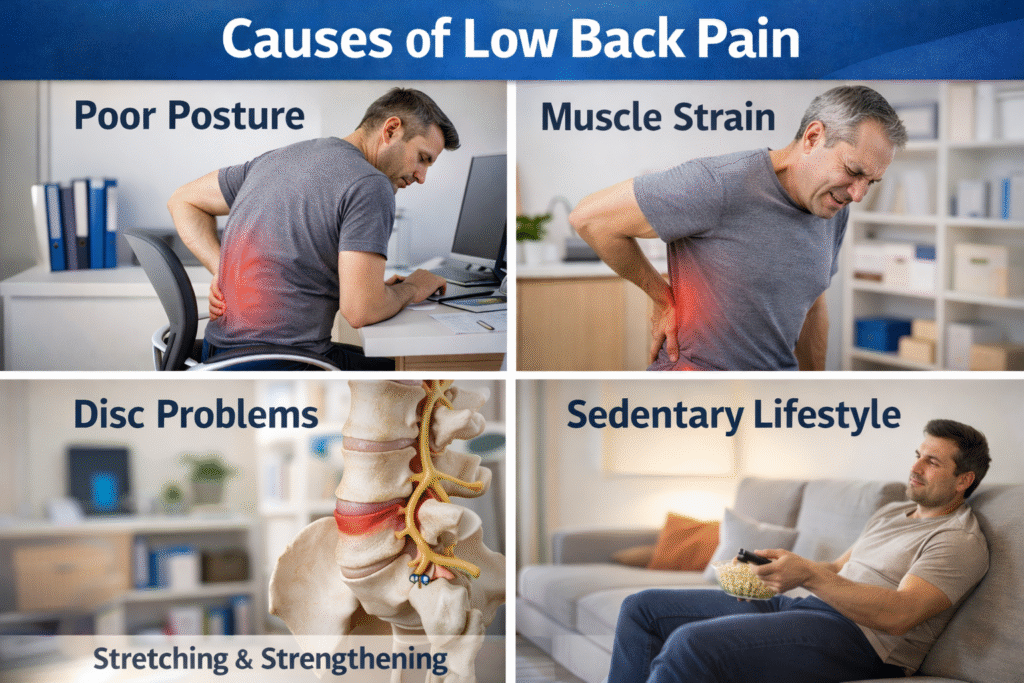
Lower back pain rarely has one single cause. Physiotherapy commonly treats pain related to:
- Poor posture and prolonged sitting
- Muscle strain
- Weak core and gluteal muscles
- Lumbar spondylosis
- Disc bulge or irritation
- Sciatic nerve involvement
- Work-related or lifestyle stress
Each condition requires a slightly different rehabilitation plan. That is why personalized care matters.
Physiotherapy Treatment for Lower Back Pain
Pain Relief Phase
In the early stage, the focus is on reducing pain and stiffness. This may involve:
- Heat or cold application
- Electrotherapy when needed
- Gentle manual techniques
This phase prepares the body for active rehabilitation. It is not meant to replace movement.
Manual Therapy
Manual therapy involves hands-on techniques to improve tissue flexibility and joint movement. It helps reduce muscle guarding and improves circulation. When used appropriately, it makes exercises more effective and comfortable.
Exercise-Based Rehabilitation
Exercises are the foundation of recovery.
In physiotherapy for lower back pain, exercises are chosen based on assessment findings, not trends or generic routines.
Stretching
Stretching helps reduce tension in muscles that overload the spine, such as hamstrings and hip flexors.
Strengthening
Strengthening focuses on core muscles, gluteal muscles, and spinal stabilizers. These muscles protect the lower back during daily tasks.
Movement Control
Patients learn how to move safely during bending, sitting, standing, and lifting. This prevents repeated strain.
Home Exercises: What to Know
Home exercises are essential, but they must be done correctly.
Physiotherapists usually prescribe a small number of exercises performed with proper technique. Doing too many exercises or copying routines online can worsen symptoms.
Consistency matters more than intensity. Correct movement builds recovery faster than aggressive exercise.

Recovery Timeline
Recovery depends on the cause, severity, and consistency of treatment.
Typical timelines include:
- Muscle strain: 1 to 3 weeks
- Postural lower back pain: 3 to 4 weeks
- Disc-related pain: 6 to 8 weeks
- Chronic lower back pain: 8 to 12 weeks
Stopping physiotherapy as soon as pain reduces increases the risk of recurrence.
When to Visit a Physiotherapy Clinic
You should consider physiotherapy if:
- Pain lasts more than a few days
- Pain keeps returning
- Movement feels restricted
- Pain spreads to the leg
- Daily activities become difficult
Early treatment prevents long-term problems.
Common Mistakes That Delay Recovery
From clinical experience, these mistakes are common:
- Complete bed rest
- Relying only on painkillers
- Ignoring posture correction
- Doing exercises without guidance
- Stopping treatment early
Pain reduction is not the same as recovery.
Can Physiotherapy Prevent Lower Back Pain?
Yes. Prevention is a key part of physiotherapy.
By improving strength, posture, and movement habits, physiotherapy reduces stress on the lower spine. Patients who continue recommended exercises and ergonomic corrections experience fewer future episodes.
Final Conclusion
Physiotherapy for lower back pain is not a quick fix. It is a structured, evidence-based approach that restores movement, builds strength, and addresses the cause of pain. When done correctly, it reduces pain, improves function, and protects long-term spinal health.
Ignoring lower back pain or treating it casually often leads to chronic issues. Early, guided physiotherapy gives the best chance for full and lasting recovery.
If lower back pain is affecting your work, sleep, or daily activities, don’t wait for it to worsen. A professional physiotherapy assessment can identify the root cause and provide a clear, personalized treatment plan focused on long-term relief and safe recovery. If your pain persists for more than 7 days, contact our physiotherapist.
Frequently Asked Questions
Can physiotherapy for lower back pain avoid surgery?
In many cases, yes. Physiotherapy often reduces pain, improves function, and helps patients avoid surgery or injections, especially when started early.
Are home exercises necessary for lower back pain recovery?
Yes. Home exercises are an important part of physiotherapy for lower back pain. They help maintain progress between sessions and support long-term recovery.
When should I start physiotherapy for lower back pain?
You should consider physiotherapy if pain lasts more than a few days, keeps returning, or interferes with daily activities.
How long does physiotherapy take to relieve lower back pain?
Recovery time depends on the cause. Mild muscle strain may improve in a few weeks, while disc-related or chronic lower back pain may require several weeks of consistent physiotherapy.
What does physiotherapy for lower back pain involve?
Physiotherapy for lower back pain includes assessment, pain-relief techniques, guided exercises, posture correction, and movement training to address the root cause of pain.