
7 Causes of Neck Pain That Spread to the Arm
Neck pain that travels down the shoulder and into the arm is a common problem. Many people assume it is just a muscle strain, but in many cases the pain is related to nerve compression in the cervical spine.
The neck contains seven vertebrae and several nerves that travel from the spinal cord to the shoulders, arms, and hands. When these nerves become irritated or compressed, pain may radiate from the neck into the arm. This condition is commonly known as cervical radiculopathy.
Understanding the cause of this pain is important because treatment depends on the underlying problem. Below are seven common causes of neck pain that spreads to the arm.
1. Cervical Spondylosis
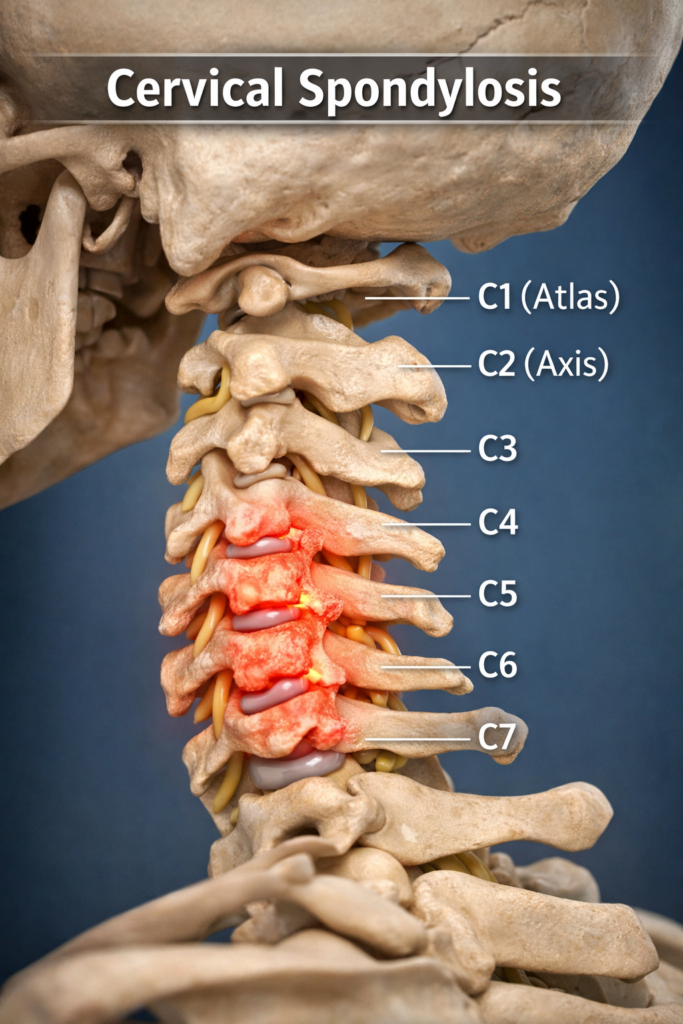
Cervical spondylosis is one of the most common causes of neck pain with arm symptoms. It is a degenerative condition that occurs when the discs and joints in the neck wear down with age.
As the discs lose their cushioning ability, the surrounding bones may develop bone spurs (osteophytes). These bone spurs can press on nearby nerves, causing pain that radiates to the shoulder, arm, or hand.
Common symptoms include:
- Neck stiffness
- Pain traveling down the arm
- Tingling or numbness in the hand
- Weakness in the arm muscles
Physiotherapy plays an important role in managing cervical spondylosis by improving neck mobility and reducing nerve pressure.
2. Cervical Disc Herniation
A herniated disc occurs when the soft inner portion of a spinal disc pushes through its outer layer. When this happens in the cervical spine, the disc material can press directly on a nerve root.
This compression may lead to pain that begins in the neck and spreads along the path of the affected nerve. In many cases, patients describe the pain as sharp, burning, or electric-like.
Symptoms may include:
- Severe neck pain
- Pain radiating into the shoulder or arm
- Numbness in the fingers
- Muscle weakness in the arm
Early physiotherapy treatment can help reduce pressure on the nerve and improve recovery.
3. Poor Posture
Poor posture is becoming a major cause of neck problems, especially among people who spend long hours using computers or smartphones.
When the head moves forward for extended periods, the muscles and joints of the neck experience increased stress. Over time, this abnormal strain can irritate the cervical nerves.
This condition is sometimes called text neck or forward head posture.
Common signs include:
- Neck pain after prolonged phone use
- Shoulder tightness
- Pain spreading to the arm
- Headaches
Correcting posture and performing strengthening exercises can significantly reduce symptoms.
4. Cervical Nerve Root Compression
The nerves exiting the cervical spine pass through small openings called neural foramina. If these openings become narrow due to inflammation, bone growth, or disc problems, the nerve may become compressed.
This condition is known as foraminal stenosis.
When the nerve root is compressed, pain may travel along the nerve pathway into the arm and hand. Patients may also experience tingling, numbness, or weakness.
Physiotherapy treatments such as cervical traction, posture correction, and strengthening exercises can help relieve pressure on the affected nerve.
5. Muscle Spasm in the Neck
Muscle spasms in the neck can also cause pain that spreads toward the shoulder and arm. These spasms often occur due to sudden movements, poor sleeping posture, or prolonged sitting.
Although muscle spasms usually do not compress nerves directly, severe muscle tightness can irritate nearby nerves and produce radiating pain.
Typical symptoms include:
- Tightness in the neck muscles
- Difficulty turning the head
- Pain spreading toward the shoulder or arm
Stretching exercises, heat therapy, and physiotherapy treatment can help relax the muscles and reduce pain.
6. Whiplash Injury
Whiplash is a neck injury that commonly occurs during road traffic accidents. It happens when the head suddenly moves forward and backward, placing excessive stress on the cervical spine.
This sudden movement can injure muscles, ligaments, and discs in the neck. In some cases, the injury may irritate cervical nerves, leading to pain that radiates to the arm.
Symptoms may include:
- Neck pain and stiffness
- Headaches
- Shoulder pain
- Arm pain or tingling
Early rehabilitation and physiotherapy are important to restore neck function and prevent chronic pain.
7. Thoracic Outlet Syndrome
Thoracic outlet syndrome occurs when nerves or blood vessels between the neck and shoulder become compressed. This compression often happens in the area between the collarbone and the first rib.
When the nerves are affected, patients may experience pain that travels from the neck into the arm and hand.
Other symptoms may include:
- Numbness in the fingers
- Weakness in the arm
- Shoulder discomfort
- Tingling sensations in the hand
Postural correction and physiotherapy exercises can help relieve pressure on the affected structures.
When to See a Physiotherapist
Neck pain that spreads to the arm should not be ignored, especially if it is accompanied by numbness or weakness. These symptoms may indicate nerve involvement.
You should consider consulting a physiotherapist if:
- Pain persists for more than a few days
- Arm numbness or tingling occurs
- There is weakness in the arm or hand
- Neck movement becomes restricted
Early treatment can prevent the condition from worsening.
Role of Physiotherapy in Treatment
Physiotherapy is one of the most effective treatments for neck pain associated with nerve compression.
A physiotherapist may use several treatment methods, including:
- Posture correction exercises
- Neck strengthening exercises
- Cervical traction
- Manual therapy techniques
- Ergonomic advice for daily activities
These treatments help reduce pain, improve neck mobility, and relieve pressure on affected nerves.
Frequently Asked Questions
What are the most common causes of neck pain?
The most common causes of neck pain include poor posture, muscle strain, cervical spondylosis, herniated cervical discs, stress-related muscle tension, injuries such as whiplash, and sleeping in an improper position. Long hours of mobile phone or computer use are also major contributors.
Can neck pain spread to the shoulder and arm?
Yes. Neck pain can sometimes spread to the shoulder, arm, or hand when a cervical nerve is compressed or irritated. This condition is known as cervical radiculopathy and often occurs due to disc problems or cervical spondylosis.
How do I know if my neck pain is serious?
Neck pain may be serious if it lasts more than a few weeks or is accompanied by symptoms such as arm numbness, weakness, tingling, severe headaches, or difficulty moving the neck. In such cases, medical evaluation is recommended.
Can poor posture cause neck pain?
Yes. Poor posture is one of the most common causes of neck pain. Sitting for long hours with the head bent forward while using a computer or smartphone puts excessive strain on the neck muscles and joints.
What is the best treatment for neck pain?
Treatment depends on the cause of the problem. Physiotherapy is commonly recommended and may include stretching exercises, strengthening exercises, posture correction, and manual therapy to relieve pain and improve neck mobility.
Conclusion
There are many possible causes of neck pain, ranging from simple muscle strain to degenerative changes in the cervical spine. Poor posture, stress, injuries, and disc problems are some of the most common factors.
Understanding these causes helps people take preventive measures and seek timely treatment. With proper care, posture correction, and physiotherapy, most neck pain problems can be effectively managed and prevented.