
Physiotherapy for Cerebral Palsy: A Parent’s Guide to Better Mobility
When a child is diagnosed with cerebral palsy, parents are often overwhelmed.
There are questions about walking, sitting, school, independence, and the future.
One of the most effective ways to improve movement and daily function is physiotherapy for cerebral palsy.
Physiotherapy does not change the diagnosis.
It changes how the child uses their body.
With the right approach, many children gain better control, improved mobility, and more independence in daily life.
This guide explains exactly how physiotherapy helps, what parents should expect, and how to support progress at home.
Understanding Cerebral Palsy and Movement Problems
Cerebral palsy is a neurological condition that affects muscle control, posture, and coordination.
It happens due to early brain injury or abnormal brain development.
The condition can cause:
- muscle stiffness (spasticity)
- poor balance
- weak muscles
- delayed milestones
- difficulty with walking or sitting
- abnormal posture
- joint tightness and deformities
These problems are not static. They can improve or worsen depending on therapy and care.
That is where physiotherapy for cerebral palsy plays a critical role.
What Is Physiotherapy for Cerebral Palsy?
Physiotherapy is a structured, movement-based treatment designed to help children use their bodies more effectively.
In cerebral palsy, therapy focuses on improving how muscles work together rather than fighting each other.
A good physiotherapy program aims to:
- reduce muscle stiffness
- improve strength and endurance
- train balance and coordination
- develop sitting, standing, and walking skills
- prevent joint contractures and deformities
- improve daily activities like transfers and posture
Why Physiotherapy Is Essential for Mobility
Mobility is not just about walking.
It includes sitting independently, standing with balance, moving safely, and changing positions.
Without therapy, tight muscles get tighter.
Weak muscles get weaker.
Poor posture becomes fixed.
Regular physiotherapy for cerebral palsy prevents this downward cycle.
It keeps the body flexible, active, and functional.
Children who receive early and consistent therapy often:
- learn to sit faster
- gain better trunk control
- stand with support or independently
- walk with or without aids
- move more confidently
- participate better in daily life
When Should Physiotherapy Start?
As early as possible.
Even before a formal diagnosis, therapy can begin when delays are noticed.
The developing brain is highly adaptable in early years. This is when learning movement is easiest.
Early physiotherapy for cerebral palsy helps:
- guide correct movement patterns
- reduce abnormal muscle tone
- prevent stiffness
- improve long-term outcomes
- reduce need for surgery later in life
Waiting does not help.
Starting early gives the child more opportunities to move correctly.
What Happens in a Physiotherapy Session?
Parents often expect machines or forced exercises.
That’s not how good therapy works.
A session usually includes:
- gentle stretching to reduce stiffness
- strengthening exercises for weak muscles
- balance and coordination training
- posture correction
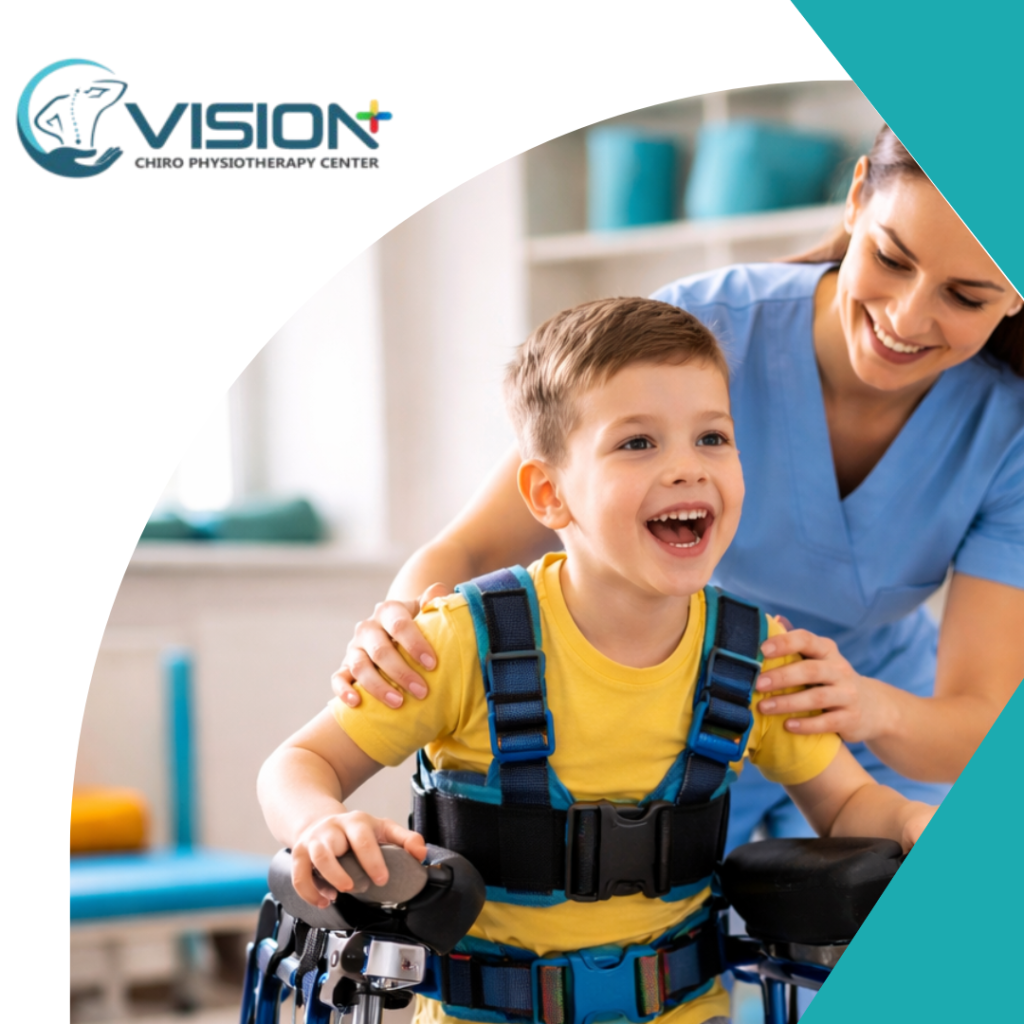
- walking practice
- functional training (sitting, standing, transfers)
- parent education for home care
For children, sessions are play-based and engaging.
Repetition happens naturally through play and movement games.
Effective physiotherapy for cerebral palsy focuses on function, not just exercises.
How Physiotherapy Improves Walking Ability
Walking requires balance, strength, coordination, and timing.
In cerebral palsy, these systems do not work smoothly together.
Physiotherapy improves walking by:
- stretching tight hip, knee, and ankle muscles
- strengthening core and leg muscles
- training weight shifting and balance reactions
- correcting posture and alignment
- practicing step patterns
- using assistive devices when needed
Some children learn to walk independently.
Others walk with support.
Both outcomes are valuable and increase independence.
Different Types of Cerebral Palsy and Therapy Approach
Physiotherapy varies based on the type of CP.
- Spastic CP: focus on stretching, posture, and functional strengthening
- Diplegic CP: emphasis on walking training and lower limb control
- Hemiplegic CP: work on symmetry and balance
- Quadriplegic CP: focus on positioning, mobility, and comfort
A skilled therapist adjusts the program based on the child’s needs.
Role of Parents in Physiotherapy Success
Therapy does not end at the clinic.
What happens at home matters more than one hour of therapy.
Parents should:
- follow home exercise routines
- use correct sitting and carrying positions
- encourage movement during play
- avoid prolonged poor postures
- be consistent, not aggressive
- ask questions and stay involved
Children progress faster when parents participate actively in physiotherapy for cerebral palsy.
How Long Does Physiotherapy Take to Show Results?
This depends on many factors:
- age at start
- severity of CP
- type of movement disorder
- frequency of therapy
- consistency at home
Small improvements may appear in weeks.
Larger functional changes take months or years.
Progress is gradual but real.
Stopping therapy stops progress.
Consistency is the most important part of physiotherapy for cerebral palsy.
Can Physiotherapy Prevent Surgery?
In many cases, yes.
Early and regular therapy:
- reduces muscle tightness
- prevents joint contractures
- improves alignment
- delays or avoids orthopedic surgeries
Physiotherapy cannot replace all surgeries, but it can reduce the need and improve surgical outcomes when needed.
Frequently Asked Questions
Is physiotherapy safe for children with cerebral palsy?
Yes. When done by a trained therapist, it is safe and essential.
How many sessions per week are required?
Usually 2–5 sessions per week, depending on the child’s needs.
Can physiotherapy cure cerebral palsy?
No. But it can significantly improve function, mobility, and independence
Is home physiotherapy really necessary?
Yes. Clinic sessions alone are not enough for good results.
Can physiotherapy help older children or adults?
Yes. Improvement is possible at any age, though progress is slower.
Contact Us
If your child has cerebral palsy, early action matters.
Delaying therapy only makes movement harder later.
Professional physiotherapy for cerebral palsy can improve your child’s mobility, confidence, and independence.
👉 Book a physiotherapy assessment today and get a personalised plan designed for your child’s needs.
Small steps taken now create stronger movement for life.