
Pain is often treated as the problem. In reality, pain is usually a signal that something in the body is not moving or functioning correctly. When that signal is ignored or suppressed with medication alone, recovery stalls.
Understanding how physiotherapy helps starts with understanding movement. The body relies on balanced muscles, mobile joints, and coordinated control. When one part fails, others compensate. Over time, this compensation leads to pain, stiffness, and reduced function. Physiotherapy addresses this process at its root.
How Physiotherapy Helps by Identifying the Real Cause
Pain location rarely tells the full story. A person with shoulder pain may actually have poor posture. Knee pain may be linked to hip weakness. Low back pain may be driven by muscle imbalance rather than spinal damage.
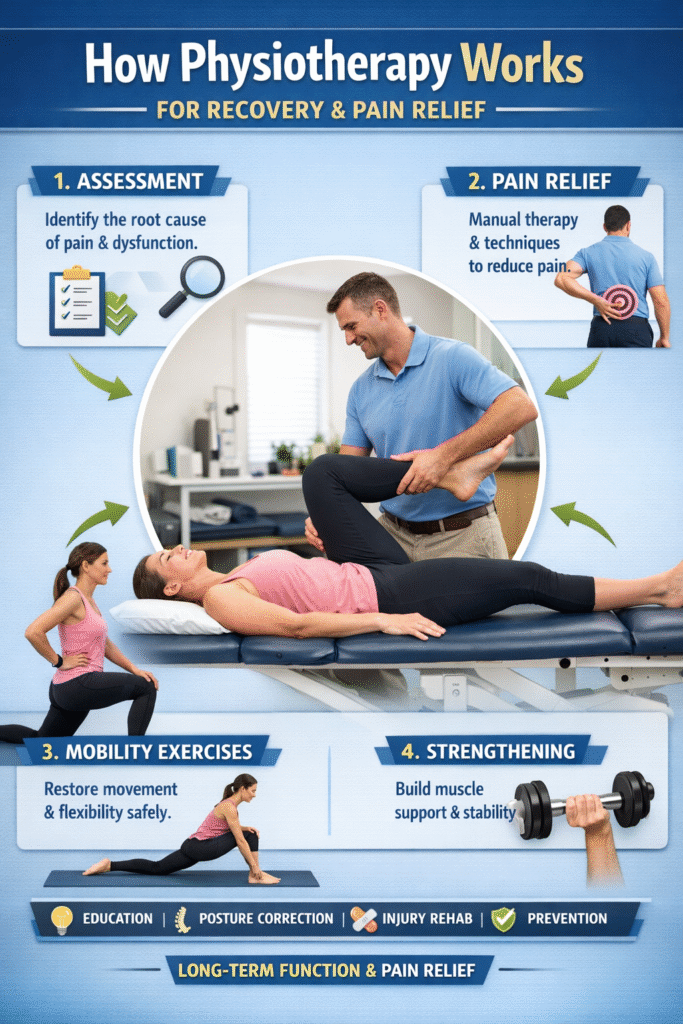
This is where how physiotherapy helps becomes clinically important. Physiotherapy begins with assessment, not treatment. A physiotherapist evaluates posture, joint mobility, muscle strength, flexibility, and movement patterns. Daily activities and work habits are also considered.
This approach prevents guesswork. Treatment is based on findings, not assumptions.
How Physiotherapy Helps Reduce Pain Safely
Pain relief is often the first concern for patients. Many expect instant results. While physiotherapy does reduce pain, it does so by improving function rather than masking symptoms.
One of the main reasons how physiotherapy helps is effective is that pain reduces when tissues move and load correctly. Manual therapy, guided movement, and controlled exercises improve circulation, reduce muscle tension, and calm irritated joints or nerves.
Pain relief achieved this way is more stable and longer lasting.
Restoring Movement Is Central to Recovery
Restricted movement leads to stiffness. Stiffness leads to weakness. Weakness increases strain. This cycle keeps pain alive.
Physiotherapy focuses on restoring movement gradually and safely. Joints are encouraged to move within pain-free ranges. Muscles are retrained to activate correctly. Confidence in movement returns.
This explains how physiotherapy helps prevent acute pain from becoming chronic. Movement is restored before fear and avoidance take over.
How Physiotherapy Helps Build Strength and Stability
Strength is not about lifting heavy weights. It is about control.
Physiotherapy uses targeted strengthening to support joints and reduce overload. Core muscles, stabilizers, and supporting muscle groups are trained to work together. Exercises are progressed based on tolerance and healing stage.
This structured strengthening is another reason how physiotherapy helps long term. Strong, coordinated muscles protect joints during daily activities, not just during exercise.
Education and Habit Correction
Many pain problems return because daily habits do not change.
Physiotherapy includes education. Patients learn how to sit, stand, lift, and move efficiently. Small corrections in posture and movement can significantly reduce stress on joints and muscles.
Understanding how physiotherapy helps also means understanding the role of patient involvement. Recovery does not happen only on the treatment table. It continues at work, at home, and during daily routines.
How Physiotherapy Helps in Injury and Post-Surgery Recovery
Injuries and surgeries require structured rehabilitation. Doing too much too early causes setbacks. Doing too little causes stiffness and weakness.
Physiotherapy respects tissue healing timelines. Early stages focus on pain control and gentle movement. Later stages restore strength, endurance, and functional ability. The final phase prepares the body for return to normal activity.
This staged approach shows how physiotherapy helps patients recover safely and completely.
Managing Long-Term and Chronic Conditions
Chronic pain does not always mean ongoing damage. Often, it is the result of long-standing movement faults and deconditioning.
Physiotherapy helps chronic conditions by improving tissue tolerance and restoring confidence in movement. Progress is gradual, but meaningful. Function improves even when pain does not disappear immediately.
This is another area where how physiotherapy helps is often misunderstood. The goal is better movement, better control, and better quality of life.
Prevention Is Part of Physiotherapy
Physiotherapy does not end when pain reduces.
A key benefit of understanding how physiotherapy helps is prevention. Weakness, poor posture, and faulty movement patterns are corrected to reduce future risk. Patients are taught how to maintain results independently.
This preventive focus is what separates physiotherapy from short-term treatments.
When Physiotherapy Makes the Biggest Difference
Physiotherapy is most effective when started early. Delaying treatment allows compensation patterns to become ingrained, making recovery slower.
It is especially helpful when:
- Pain persists beyond a few days
- Movement feels restricted
- Pain keeps returning
- Daily activities are affected
Early assessment leads to faster, more complete recovery.
Final Thoughts
Understanding how physiotherapy helps changes how pain and recovery are approached. Physiotherapy is not passive care. It is an active, evidence-based process that restores movement, builds strength, and addresses the cause of pain.
It does not rely on shortcuts. It relies on assessment, guided movement, and consistency. When the body moves well, pain has less reason to stay.
If pain, stiffness, or limited movement is affecting your daily life, don’t wait for it to worsen. A proper physiotherapy assessment can identify the root cause and give you a clear, personalized recovery plan focused on long-term results, not temporary relief.
Get expert guidance, targeted exercises, and a structured recovery plan.
Frequently Asked Questions
How physiotherapy helps in reducing pain?
Physiotherapy helps reduce pain by correcting movement problems, relaxing tight muscles, improving joint mobility, and restoring normal muscle activation without relying on medication
How physiotherapy helps in long-term recovery?
Physiotherapy focuses on strengthening weak muscles, correcting posture, and retraining movement patterns, which prevents pain from returning after treatment ends.
How physiotherapy helps without surgery or injections?
Physiotherapy treats the mechanical cause of pain through assessment, guided exercises, and manual therapy, reducing the need for invasive procedures in most cases.
Pingback: Physiotherapy Is Better Than Painkillers – Here’s Why
Pingback: Complete Guide To Physiotherapy After Knee Replacement Surgery